
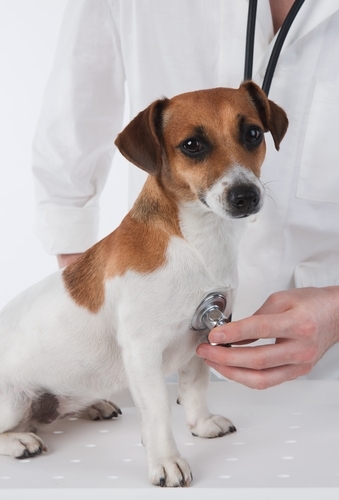
You may have done yearly pet exams in the past, often associated with <shudder> yearly vaccinations, if you’ve been in a conventional veterinarian’s care.
You dutifully brought in a baggie with some fresh stool in it. Bowser got up on a stainless steel table, got a thermometer stuck in his anus, and received a physical exam.
But now, you’ve put your animal on track to be a vital animal, one who lives a long, shiny life, free of health concerns. You’ve stopped vaccinating, you’re feeding balanced raw food, using non-toxic flea control methods, you’re giving immune support, and you’ve stopped the toxic drugs that kill heartworm larvae.
Should you still bring him in yearly for a check up?
The yearly exam question comes up from time to time, and I think behind it is a far more important question:
Who’s Responsible for My Animal’s Health?
If you answer, “my vet is,” this post is not for you. And I’m not likely to be your veterinarian.
If your answer is, “I am!” you’ve come to the right place and I’m here to help you succeed.
I’m on board to answer questions, prescribe homeopathically when symptoms point to an imbalance that needs to be addressed, and am happy to put my hands and eyes on your animal on a yearly basis or any other time you’d like me to.
Won’t My Vet See Things I’ll Miss?
Perhaps he might, sure. It never hurts to have a professional’s hands on your animal.
Some things I’ve noticed on exams that owners have missed:
-
Dull coat
-
Shedding
-
Coarse coat
-
Dirty teeth/red gums (you may have noticed bad breath, though…)
-
Distorted, brittle nails
-
Fearful behavior, or restlessness, or even aggression
One of my favorite “ah-ha’s” was having a new cat patient in my office, and being seemingly at the end of my intake questions, all answered by my dutiful and observant owner. I had written next to nothing by “mental/emotional,” as the cat walked calmly around my exam room while we talked.
Suddenly, she came to a low window, and saw one of my cats outside. She came unglued! Screaming at the top of her lungs, hair standing up, and looking like she would somehow squeeze through the screen to get out to eat her alive!
“Wow, you didn’t tell me she had such a strong take on other cats!”
“Oh, that. Yes.” Her owner had taken it for granted, and so no mention was made.
Things You’ll Know That Your Vet’s Exam Won’t Reveal
You’ll know things of great value from your daily observations at home, once you’re cued in to look for these things.
These things are called symptoms, and your homeopathic vet will be very interested in these, while they may mean nothing to a conventional vet.
-
My dog goes out every night while we’re all sleeping.
-
He’s terrified of flying insects!
-
After eating, he burps loudly.
-
When she sleeps, it’s with all four feet in the air.
-
At 4:00 every evening, he’ll clear a room with his gas!
-
Whenever I change her diet, she’ll have a loose stool for days.
And so on. These are impossible to glean on a vet exam, yet so important to assess your animal’s wellness, and make decisions about a likely remedy to get her back to being vital.
A homeopathic yearly exam will, by necessity, include questions to uncover things like this.
Don’t I Need a Fecal Exam?
This leads me to ask, “How many times have you seen a positive result in the past?”
If your animal is well, vitally so, he won’t allow parasites in. They just won’t have a home. Likely, if you’ve done them in the past, they were negative time and again.
How about a yearly Heartworm Test?
Definitely a good idea if you live in a heartworm endemic area like Texas. Here’s a 2012 incidence map to help you decide how likely it is you’ll need such a test in the U.S.:
http://www.capcvet.org/parasite-prevalence-maps/
I recommend my patients receive this test yearly, regardless of whether they are opting out of the heartworm drugs or continuing to use them.
Blood Counts? Blood Chemistry Screening?
There’s no harm in doing these periodically, though I’ll usually not ask that my patients receive them yearly. Consider though, can you get in and out with just the blood work, or will you be pressured into getting vaccinations that you don’t want?
More importantly, to the extent that you are the watchful caretaker of your animal, you’ll know something’s wrong likely before the blood results show it.
Long before there were multiple blood tests, imaging services, and high tech diagnostics available, observant people knew when their animals were unwell.
And homeopathic doctors could use that knowledge of how they were not well to get them back on track once more. Symptoms can be clearly ascertained and point us to remedies to cure your animal.
So, do you do annual exams? Have they been valuable? Do you use them more or less than you did 5 years ago? Let me know in the comments.