
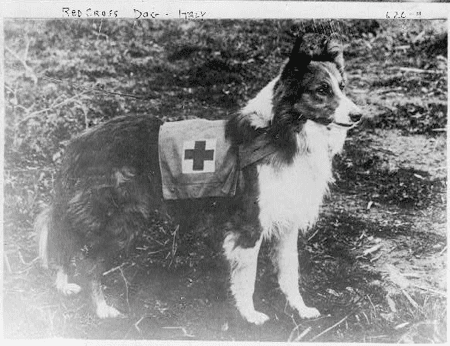
I have had the good fortune to help a few in my small corner of the world. Inevitably, I’m torn by the inane requirements they live under to do their jobs, requirements that are at once unnatural and damaging to their health.
The Drug Sniffer Who Loved His Job
One such remarkable guy was Trooper, a ten year old black Lab, who came to me in such a damaged state that I was barely able to help him. His job, the job he absolutely loved, was going to work for his State Trooper handler in detecting illegal drugs.
His handler, David, related that Trooper was originally found in a shelter as a stray and trained for the U.S. Customs border patrol to detect narcotics entering the country. When asked if he was “ready to go to work,” Trooper responded with excited barking and jumping nearly six feet off the ground!
Not only highly skilled and valued, he loved to work. He couldn’t wait to “load up” and head out to his job.
Trooper had been retired at the young age of seven, as he showed the signs of adrenal gland disease, aka Cushing’s: tiring easily, hair falling out, excessive thirst and appetite, loss of muscle mass, and reluctance to jump. David felt extremely fortunate to get Trooper for his work and admitted that the dog pretty much trained him.
This hard working, enthusiastic dog came to me with severe neurological disease, tentatively thought to be caused by a brain tumor. Seizures had begun four months prior to my seeing him, and he’d recently had “at least fifteen seizures between the hours of 10 AM – Midnight.” He’d fall, kick, bite the air, moan, then pop to his feet, pacing restlessly for 30-40 minutes afterwards, and he was on phenobarbital to try to control the convulsions.
Trooper had a litany of chronic diseases: arthritis, hypothyroidism, Cushing’s, warts and nodules, and a chronic cough. He’d been medicated for most of them, often by adding another drug to his regimen as yet another condition was diagnosed. I was finally called as his life was one of near incapacitation, as the seizures overtook him in clusters.
Real Dogs, Real Service
Another patient of mine could smell the blood sugar levels going wrong in her charge, a diabetic girl, and signal her parents to action.
Yet another dog was the calming influence for his girl dealing with autism, and without Joey being there, her life was one of screaming chaos. He travels everywhere with her, and just touching him brings her back from the precipice of angst.
How to Impair Your Greatest Servant
His history reveals why Trooper was so sick. He was vaccinated yearly, and only got a waiver in the past few months when his seizures had become so severe. Besides the usual combo wombo 5-way distemper shot, rattlesnake vaccines were given annually. Toxic pesticides were used against fleas and heartworm regularly. Trooper was fed for years on a diet of Purina Pro Plan (check those ingredients: would you eat something called “animal digest?”) with a recent switch to a “natural” kibble.
The rub, oftentimes, is that the dogs who “sign up” for serving mankind, in whatever form that takes, are usually subjected to all the ills of conventional medicine’s ideas of “prevention,” the same procedures that I see as critical impairments to their health.
We ironically do the greatest damage to those individuals who offer our own species the greatest service.
“He’s Really Sensitive to What’s Going on Around Him”
As a homeopath, I need to learn the temperaments of my patients along with their disease symptoms. Many of my patients are the sensitive sorts who naturally offer sympathy to their guardians when they are feeling down.
Several guardians have been interested in taking their dogs into hospital or hospice settings, and discovered that repeated vaccinations were a necessity to be part of such programs. As if those sick people visited might “catch something” from them that repeated vaccinations would eliminate.
A crazy idea.
If vaccinated for rabies over the age of four months old, these dogs are highly likely immune for life now. Who says so?
Veterinary immunologists.
And distemper? Parvo? Dog diseases, not human ones. Repeated vaccines will only make the dogs sick, not protect the bed ridden patient who would so benefit from a dog cuddling up to her.
[Multiple studies have shown a profound effect on the physiology of patients who receive interaction with animals during their illness]
Rolling the Boulder Up the Mountain
Educating the “powers that be” is usually akin to pounding sand. Not much effect or hope of changing minds in this arena, as the conventional medical paradigm often equates “more” with “better.” If vaccinations are perceived as good, then annual or even semi-annual “boosters” must be even more beneficial.
It’s important that we try where we can, however. Armed with the knowledge that repetitive vaccinations clearly do not boost immunity and the vaccinations are often associated with provoking immune disease (Trooper’s hypothyroidism and Cushing’s are two examples of the many seen), we can write, talk to, and visit those who might sway decisions that affect the service dogs of the world.
Not as easy as “voting with our wallets,” by supporting groomers and breeders and kennels and vets who understand “current on vaccinations” really means “was previously vaccinated in early life.”
As always, you can let your Vital Animals be visible examples of what’s possible in animal health when you step out of the damaging “norm” that is conventional veterinary medicine today.
Let us know in the comments if you’ve found ways to have your animals in a service role without risking their own health.
There’s such a great potential for good to those suffering humans from these valiant canine servants. It’d be a shame to damage them to receive the immense gifts they offer us.