Surrendering to that inner reality, ironically I become more powerful in the outer.
Our animals mostly have us humans to surrender to, having been born with minds that don’t contemplate divine phenomena as we humans can. What we give them, they take. How they are sheltered, what they are fed, how they are treated, these are all things we manage on their behalf. It’s as if we’ve been given live gifts to culture and nurture, and the efforts we put in have dual rewards: the animal benefits and we in turn are fulfilled in their thriving and loving us and serving our needs.
Horses and surrender
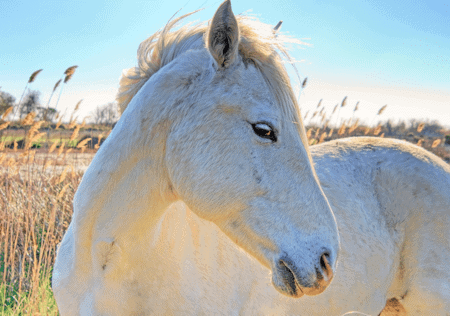
As a lad, I was graced with the opportunity to be with horses. Lots of them, in a herd that I grew to love and later nurture.
There was mutual surrender. They to our reins and bits in their mouths, and we to their massive size, that could crush us or stomp us to a pulp if they chose to rebel.
Those of us lucky enough to feel some affinity for these fine beasts got more from them. Without asking, we received recognition, service, warmth and a chance to grow in ways that were incalculable.
Where I am today I owe to horses.
Well, more than horses, certainly, but they clearly shaped who I am today. They taught me what it means to care for others, to take responsibility for the wellbeing of another, and in so doing, to reap benefits that would be impossible in one focused solely on one’s own needs. My appreciation of them ultimately helped me choose the path to veterinary school.
Unlike the dogs I grew up with, horses, by their very nature, have unique needs due to the bodies they inhabit. It’s well and good to invite a dog or cat or other small creature into your dwelling and even into your bed. The sheer size of this equine species necessitates a greater environment. For those of you who interact with these special animals, that means you either have a large tract of land and a barn or you find someone else who does to house your companions.
And therein lies the rub.
Management is given over to another in such situations. You have to surrender to the house rules where you board your horse, in order to keep him there. Very different than boarding your kid at camp for the summer or your dog or cat in the kennel while you travel, horses live their entire lives in a boarding situation, more often than not.
When Management Lives in Fear
Horses have a value that humans perceive to be greater than some other things they own. You may have heard the joke about how horses and boats are quite similar: they are both holes you throw your money down.
By sheer size, their food needs are measured in pounds or tons, not ounces or cups. They require equipment to ride and transport, and equipment to clean up after them. Vets examine them and treat them, farriers help keep their feet in good health, and breeding animals may have a team of reproductive specialists harvesting eggs or artificially inseminating the mares.
Those entrusted to manage their housing, those folks you pay to “horse sit” on a monthly or life long basis, often live in fear of the responsibility that comes from managing an expensive animal for someone else. Lawsuits have become a part of modern life, and I expect they happen all too regularly in the horse world.
Fear drives bad decisions. In health care, those decisions can be downright disastrous.
The Most Dangerous Decision a Barn Manager Makes for You
One “prevention” decision that horses suffer under at least as much as pets and maybe more is repeated vaccinations throughout their adult lives. Unless you have your own plot of land and barn, you are often up against inane vaccine requirements where ever you board your horse.
It’s a common practice to “have the vet out” annually for this purpose, if not twice yearly. Every horse on the premises gets vaccinated for what ever is all the rage that year. Commonly, this includes:
-
EWT: Eastern and Western Encephalitis virus and tetanus, a bacteria that lives in manure.
-
Flu: influenza, a virus related to our own version.
-
Rhino: a respiratory and reproductive tract virus.
-
Rabies: while there’s no law mandating it, horses do get the disease and its vaccine.
Here’s an example of a recommended vaccine schedule, by a university (!) who should know better. Do you think the average barn manager will think outside this crazy box? Or question her equine vet, who’s likely following similar misinformation? Not likely.
Now, remember how virus vaccines confer long-lived duration of immunity? Probably life long, say veterinary immunologists.
Are horses an exception to this rule? No.
And how often is it recommended that you repeat tetanus injections for yourself? Every 10-12 years, right? There’s a very long duration of immunity here as well.
Are barn managers up on their immunology enough to question this common knowledge? Heavens no. The vet pumping these in yearly isn’t even paying attention enough to stop doing it year upon year!
Decisions Made in Fear: Health Havoc Results
The herd I grew up with through my formative years had one “cold” that I can recall, in over ten years of hanging close to them and paying attention to who was having what challenges. This cold provided us budding teen boys plenty to laugh about, as the cough had a concomitant burst of flatulence, but the horses weathered it in a few weeks. Not one went off feed or acted sick.
And that was it for infectious disease. And they might have had a tetanus vaccine given every several years, but certainly nothing annually.
We never had a horse founder, there may have been one colic, and there was the usual assortment of cuts and scrapes that we took care of ourselves. This was in the 70’s, largely.
Nowadays, chronic disease is the norm for the horse, as it is in our pets and ourselves. Diseases include Cushings (adrenal gland disease, associated with a tumor in the pituitary gland — yes: in the brain), insulin resistance, chronic colic, asthma aka heaves, chronic laminitis, and a host of tumorous growths, from sarcoids to melanoma.
Some of this comes from mistakes in feeding management, like overfeeding grain vs forage, but anything with an immune basis makes us think immune confusion, most commonly caused by vaccination.
What’s a Caring Horse Guardian to Do?
Short of buying large tracts of land and erecting barns, horse guardians need to be proactive, learning about options like titer testing (and its proper interpretation) and duration of immunity.
As with groomers and kennels in the small animal realm, you need to initiate conversations with barn managers about the vaccine side of their requirements, and, when possible, vote with your pocketbooks for those enlightened stables.
Horses can be shining examples of Vital Animals that can change the world, as much as any pet. But to achieve and maintain that status, you need to avoid the potholes and ditches along the Natural Path, like repeated vaccinations.
Have any knowledge of enlightened barns and managers who “get” how important all this is? Tell us in the comments. Perhaps we’ll be able to build a database for future use.
Photo courtesy of Wolfgang Staudt