

One Size Fits All. Oh wait. Is Your Animal Average?
A reader writes,
I subscribe to your newsletter, bought your book on preventing heart worm and have learned so much. My St Poodle weights only 43 lbs., is 8 yrs old. She eats honest kitchen food. I can see and feel her spine and ribs. They are more prominent than they should be. I would like to put some weight on her. What can you suggest I feed her? She has been on grain free since a year old because she had ear infections and eye stains when on food with grains. That cleared after we eliminated grains.”
Another reader writes,
Factory-farmed poultry can be problematic for dogs.…my dog’s skin turned black and smelly. This condition resolved when I stopped feeding chicken.”
Another who saw me yesterday with a patient said,
He gets way more fleas than the other dogs in our house.”
I saw two dogs last week who’ve lived together for years with their people, and they were quite different, though eating the same good raw food, in the same household. Both had a vaccination as an adult to travel through Canada to relocate here in Texas. Nigel, the Aussie/Bulldog mix reacted a week later with a swollen, red inflamed muzzle, oozing fluid. Jazmine, the Rottweiler, had the same vaccination, on the same day, and 3-4 days later reacted with intermittent diarrhea.
Nigel has to be prompted to eat. Jazmine would eat hungrily at any opportunity.
What have you learned about your animals?
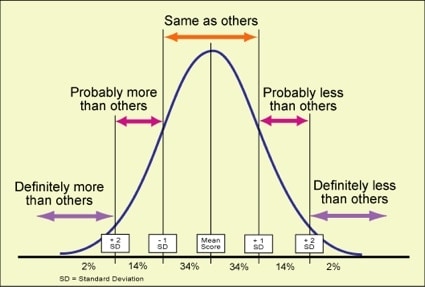
The somewhat maddening thing about biology is that its members are quite variable. You know the bell curve? It’s the curve with the big hump in the middle that tapers out to either end. In the middle are the average things, dogs, people, insects, etc. and out at either end are the extremes, high and low.
An appetite bell curve would have the anorexics at one end, those dogs or cats that need hand feeding, maybe stirring between bites and cooing to get them to eat, and the opposite end has the ravenous eaters, who’d eat a bar of soap if you didn’t watch them! And in the middle lie the average guys: you put the food out, they dig in, finish pretty quickly, and don’t think about food till it comes around the next time.
So, where are your animals on the bell curves of life? Some that might be useful include:
-
Appetite, as above, including eating lots but being skinny
-
Thirst (rarely drinks, even after exercise to frequenting the toilet, the pool, the tub after you shower)
-
Ease of stool passage (one end: very difficult, infrequent, unless you add canned pumpkin, to the opposite, 5-6 stools a day and falling out unnoticed)
-
Reactivity to stimuli (startles easily to anything new all the way to indifferent, hard to get his attention)
-
Reactivity to foods (can only eat a very limited diet or all hell breaks loose: diarrhea with the slightest change, itchy skin with chicken, to the “cast iron stomach” where anything vaguely resembling food is just fine.
-
Cold natured, can’t get warm enough vs wasted in the heat, loving the snow, or liking the middle ground (like me).
There are two points to this story:
- You need to know the quirks and individuality of your animal. I’d suggest you write them down.
Why is this useful? Well, if you ever hire a veterinary homeopath to help your animal, we’ll want to know all this stuff and more. It’s why I posted this page on symptoms. Homeopathy really only works when we get the whole patient figured out, and match a remedy to that patient that can elicit a healing response.
- You need to learn what works for your animal.
Where is your animal on the bell curve?
Feeding chicken causes smelly, dark skin but that goes away when you feed turkey?
He has to eat a lot to maintain weight?
If you buy a food for your dog or cat, there’ll often be a “recommended amount to feed” on the package. Guess who that’s speaking about on the bell curve? You got it: the guys in the middle, the average 40-60 lb dog or 10 lb cat. Are your pets in this group? Maybe, but you’ll have to watch and learn.
If you are feeding the recommended amount and your dog stays too skinny, start by adding 25-50% more to the food bowl, and see where that weight goes. Or, add enzymes, especially if you are feeding a kibble (you know not to feed your cat kibble, right?)
If the recommended amount on the box isn’t cutting it, you need to, literally:
Think outside the box!
This is going to be true in a lot of areas, especially if your goal is the raising of vital animals, the guys who shine, have a bounce in their step and will be around to live a long and joyful life with you.
I submit that if you just follow the party line and dutifully march in to Dr. WhiteCoat each year to do whatever is recommended, you’ll have a damaged animal in a relatively short time. Way too many vaccinations will come, for one thing. And food from Food, Inc. that will damage health as well. And flea poisons. And heartworm pesticides.
Here’s a recent example from my practice. A charming 17 year old cat came in because his owner was just not ready to start insulin for him, as recommended for his blossoming diabetes. Don was also being fed, at a “holistic” vet’s recommendation, a prescription diet from Hill’s, M/D, touted as glucose management food.
As I’d never heard of it, I quickly looked up the label and was floored! Label detectives, get out your magnifying glasses, this one is unbelievable.
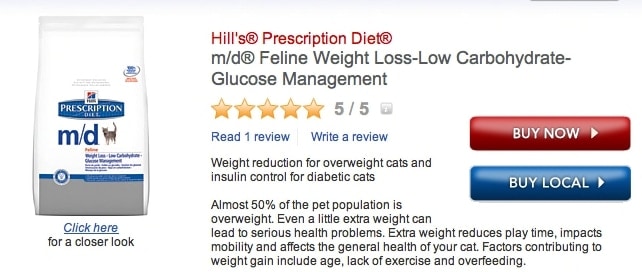
I’ve copied the first 9 ingredients for your review:
Chicken By-Product Meal, Corn Gluten Meal, Pork Fat (preserved with mixed tocopherols and citric acid), Pork Protein Isolate, Powdered Cellulose, Brewers Rice, Whole Grain Corn, Dried Egg Product, Chicken Liver Flavor…
Here, in the name of glucose management, is corn gluten meal at #2, the sugariest possible ingredient is pet food. And number one is byproducts, which can include any number of toxic waste products from the killing floor. #4 in the list is likely sawdust (yum, good fiber, important for health!), and “brewers rice” is a spent byproduct of the brewing industry. Then More Corn! And a flavor that likely came from New Jersey’s chemical factories where organic chemistry runs wild to make addictive flavors of all manner.
As my head spun, I spun my iMac around to show Annette, who was as appalled as I, and we decided on the spot that Don was going to be offered some whole Cornish hens that very night. Last report, he was interested (after being a bit afraid at first — whoa, what’s that, Mom?).
So, yes, think outside the box. And the can, and the bag and the system. Learn all you can. You can listen to everything recommended to you by the whitecoats, but make up your mind once you’ve researched further. You rarely have to decide on the spot, unless your animal is bleeding and needs a transfusion to save her life.
Got some furry family members who don’t play by the bell curve rules? Tell us about them in the comments.