

What if the “medicine” you were given to get rid of fleas, ticks, and heartworms in your dog turned out to be toxic and was causing poor Sadie’s liver, kidneys, and skin to go into overdrive, trying to keep that poison from bringing her to her knees?
Not a pretty picture, but there continue to be many reports of deaths and illness coming in from owners after the use of this drug called Trifexis.
What is Trifexis?
Made by Elanco (a division of Eli Lilly and Company, the global pharmaceutical manufacturer with sales in the billions), the drug is a combination of two drugs found in other products:
-
Spinosad, a pesticide sourced in the United States, the main ingredient in Comfortis, the flea killer, and
-
Milbemycin, a pesticide sourced in China (per Dr. Connell, the vet on staff at Elanco), and the main ingredient in Interceptor, the heartworm larvae killer.
Here’s a map of Lilly’s plants around the world:
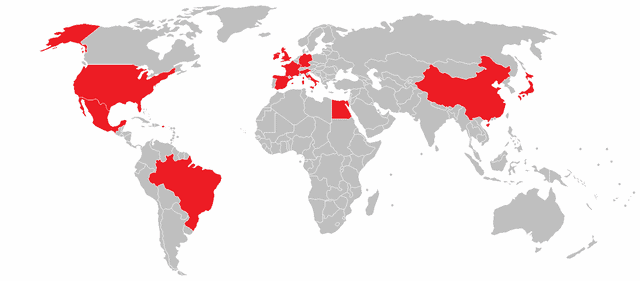
If you live in Canada, the UK, or Australia, your version of Trifexis is called Panoramis. And, if the name Trifexis scares you, you can get the very same product now under the name Comboguard.
What’s Happening to Real Dogs after Taking Trifexis?
Of course the whole idea of giving pesticides to animals is a bad idea, right? How could they possibly make an animal healthier? Well, some folks missed the memo apparently, as Elanco has sold well over 50 million doses as of November 2013.
Update: According the Indy Star’s report on veterinary pharmaceuticals (and how wildly unregulated that whole world is), the company said they’ve sold over 70 million doses. And that’s 2013 data. How many more have been sold since then?
Some of the most striking conversation is taking place on the AVMA (American Veterinary Medical Association) website itself (this page has been taken down, sorry), though there is a a special Facebook page with lots of concerned pet owners who have lost animals or had animals sickened after taking Trifexis. In addition, Atlanta station WSB-TV has a couple of stories from late 2013 on problems post-Trifexis, including deaths, and Elanco’s response (“the drug is innocent, no correlation”).
Reports from real people with experience from their own animals include:
-
Failure of the product to rid hook worms (part of its label claims).
-
Refusal of the subsequent doses by dogs who got ill on the first dose.
-
Blindness immediately post-Trifexis dose, from detached retinas.
-
Death. (By some counts in November 2013, some 700 dogs were alleged to have died from ingesting Trifexis. Note: try to find more recent data on dog deaths related to Trifexis! I couldn’t as if May 2, 2025)
-
A vet who’s seen harm first hand in his patients, reported it to Elanco, and pulled the product from his shelves.
-
Vomiting, a very common side effect by the number of reports.
-
Pancreatitis.
-
“Fly biting,” an air snapping behavior common in epileptic dogs.
-
Seizures.
-
Confusion, restless wandering.
-
Weakness in rear limbs; paralysis.
-
Heart disease.
-
Lethargy.
-
Hypersensitivity, acting as if suddenly bitten. Touchy.
What’s striking in all these many, many reports is that, while some of them came on after the first dose (including deaths), many came on after months of use or even a year.
How to Recognize the B.S. : Six Ways
Elanco, and the AVMA (and FDA) right along with them, are spinning the story that tries to tell all these people that their animals who either died or got paralyzed or went blind right after taking Trifexis have no reason to blame the drug. This is largely based on necropsies (think autopsies on animals) reviewed by an “independent pathologist.” That’s a very good place to start.
The “independent” veterinary pathologist is Jeffery Engelhardt. He was hired by Elanco to review necropsy reports on three Visla pups who died within days of ingesting Trifexis. This man has a prior history of working for Eli Lilly, the parent company, for over 20 years.
Interestingly, there were seven pups in this litter. The three that got Trifexis all died, while the four who didn’t never even got sick.
Are you raising your eyebrows yet?
So, we have
-
B.S. Point One: The “proof” was provided by someone with ties to the manufacturer reviewing the work of other pathologists.
-
B.S. Point Two: Study samples to get a new drug labeled are by necessity small. Their findings (no deaths) don’t negate what hundreds or thousands of pet owners are seeing in their dogs (illness and death).
-
B.S. Point Three: A necropsy on three dogs showing heart disease does not let the drug off the hook as the cause. A vet contacted at Elanco admits as much.
-
B.S. Point Four: Necropsy results of a poisoned animal are “non-specific.” In other words, they could be anything. Organ failure would rank high but there’s no way to see a “footprint” of Trifexis poisoning, and, absent that, say it was not to blame. There’s an old saying, “You can’t prove a negative.”
-
B.S. Point Five: Poisoning (with anything) is most often the presumed diagnosis based on history of ingestion and symptoms showing up as a result. Pathology could vary widely. So, somewhat like #4, necropsy findings alone cannot be used as a defense in a poisoning case.
-
B.S. Point Six: Elanco set out to look for another cause of death. An Elanco vet is quoted as saying,
What we look for are underlying causes, pre-existing conditions – any other indication that the dog had any other reason for dying.”
So, the very starting point in interpreting the necropsies, as you can well imagine, is biased. They sell this drug, they would rather not incriminate it as the cause of illness or death. They’d rather avoid the cost of pulling it off the market and reimbursing the likely thousands of people who would make claims against them.
So, What to Do?
The clear take away from all of this is simple. You need to be a smart consumer. Keep your ear to the ground, and if you hear hoof beats, and you don’t live in Africa, expect they were made by a horse, not a zebra.
Just as you’ll never convince a mother who lost a child to vaccine induced autism by telling her there’s no conclusive proof, neither will you be able to dissuade thousands of animal owners who’ve seen illness or death after giving a drug, that the drug was not responsible.
You need to raise Vital Animals, who can withstand the vagaries of life, and you won’t get there by using pesticides to kill fleas, worms or heartworms.
Why?
Pesticides are poisons.
For a drug-free alternative that’s been working to prevent HW safely for over 30 years,click here.
Picture attribution: Wikimedia Commons
Map attribution: Wikimedia Commons