
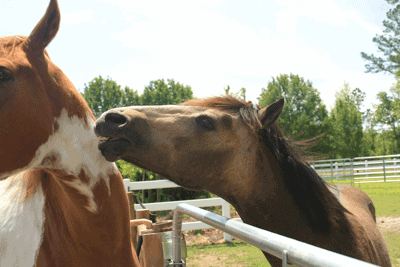
This is aberrant behavior, right? No amount of ‘splaining or excusing this behavior or blaming the parent or the kid for being near this horse’s head ultimately touches why this happened.
Spending every moment I could from age twelve to age twenty-something around a herd of horses with all kinds of personalities, I never once saw a horse take a chomp out of anybody. We had a trail riding program and took all ages of kids on trail rides, including those too young to be on a horse alone, and did this every day for the entire Summer, every year.
How many bites?
Zero.
Looking Behind The Scenes
I’d like you to consider another explanation, one that pretty much only homeopathic vets and those who’ve studied homeopathy will immediately think of to explain this behavior:
Rabies vaccinations. A lot of them.
Small animal guardians, take note: most horses are “boarded” somewhere every day of their lives, except for the percentage of the population whose guardians own enough land to keep their horses on their own property.
Barn owners and managers often demand vaccinations repeatedly throughout a horse’s stay at their barn. This is commonly a yearly vaccine repetition if not twice yearly, and rabies vaccine is more common in recent years as part of that requirement.
In fact, horses may surpass dogs and cats in the frequency of vaccinations in their lives. Why? Because rules are being set by people without the training to know that repeated vaccinations is a fool’s work.
It doesn’t work. And more importantly, it causes illness.
Rabies Vaccinosis Induced by Rabies Vaccine
In homeopathy, it’s long been recognized that disease often ensues after vaccination. And that disease often includes the nervous system, especially when we give a rabies vaccine.
In the wild, rabies virus attacks the brain, changes the behavior from sociable to aggressive, and breaks the social barriers against biting. That’s how this disease spreads. Dog meets rabid fox, rabid fox bites susceptible dog, virus from the fox’s saliva enters the bite wound on the dog and slowly but surely follows the nerves in the area to settle in the brain. When it reaches the brain, behavior changes to allow the dog to lose his bite inhibition, and he bites another animal or human, and rabies moves to the next host.
Is it really such a stretch to imagine attenuated or killed rabies virus in rabies vaccine might induce behavior changes in the vaccinated horse, dog, or cat? I’m confident we see this regularly.
Here’s what one of my colleagues had to say, from her years of working with horses in New York:
In NY, owners are encouraged and in many barns required to vaccine yearly. Of course, I see only chronic and really sick horses, but all of my horse clients have over the top Rabies titers. There is a greatly increased rate of emotional instability, but even greater is a state of mind that while not a viciousness, but a lack of concern for people. Many seem indifferent to injuring people, a break in their “moral code” — Cynthia Lankenau, DVM
The good news? There’s no law to vaccinate a horse again rabies. They are not a species who is a great enough risk to spread the disease, being herbivorous, unlike the dog or cat.
So, we’ve got to get the word out to the barn managers, one at a time. Horses are no different than dogs, cats, or baby humans: if they had a vaccination after about 4 months of age, the likelihood of them remaining immune for life is very, very high. So say the immunologists who know about this oft-forgotten thing called DOI, or duration of immunity.
Horses are not naturally vicious. Horses vaccinated unnecessarily and repeatedly against a nervous system virus could easily lose their normal social behaviors. That’s what rabies does in the wild. Why would rabies vaccine be much different?
Photo credit: Wendy